Always seeking to shake things up a little, last night I took a look on cycle.travel at railway stations in the ‘local’ area with a view to catching a train out to somewhere and riding home. I wasn’t looking to go too far, just to get me into terrain where I could access ‘the way less trod’. After a little searching I settled on Moorthorpe, a place I could reach for the princely sum of £3.80 (with Seniors Railcard), returning home by taking in some cycling paths in areas I’m familiar with but have never ventured on. I was particularly attracted by the fact that cycle.travel showed most of them as paved.

No early start required since I’d only be cycling around 30 miles and besides, I wasn’t keen on mixing it with the morning commuters into Sheffield. The train arrived on time – from experience, I’ve found they usually do on this section – and I boarded at the doors marked for cycles. The cycle space was one of those bays designed to accommodate two bikes, but which had fold down seats for use when there are no bikes. I can see how this is an efficient use of space, but when someone occupies one of the seats (or fills it with luggage) and clearly wasn’t going to give it up for a bike, it can lead to conflict. With only a 20 minute journey into Sheffield and people socially distanced across the train, I was happy to stand out of the way with my bike in the vestibule area. The train manager made no move to shift the bloke in the seat, nor me; I guess in these times she’s had more troublesome things to worry about … like the group of six blokes aged around 30ish supping cans of beer (at 10:30 in the morning) and none of whom were wearing masks. There were a handful of other folks also maskless and whilst I could concede some of them might be exempt, surely not all of them?
Arrival in Sheffield was on time, as was the Leeds train which would take me to Moorthorpe. This one was far less busy and being first on, I had no trouble accessing the bike space. Around half an hour later I detrained in Moorthorpe and had the Mallard Coffee Lounge in the station buildings been open, I’d have stopped for a cuppa. Sadly it appears to have gone out of business as a result of the pandemic – it and how many others I wonder?
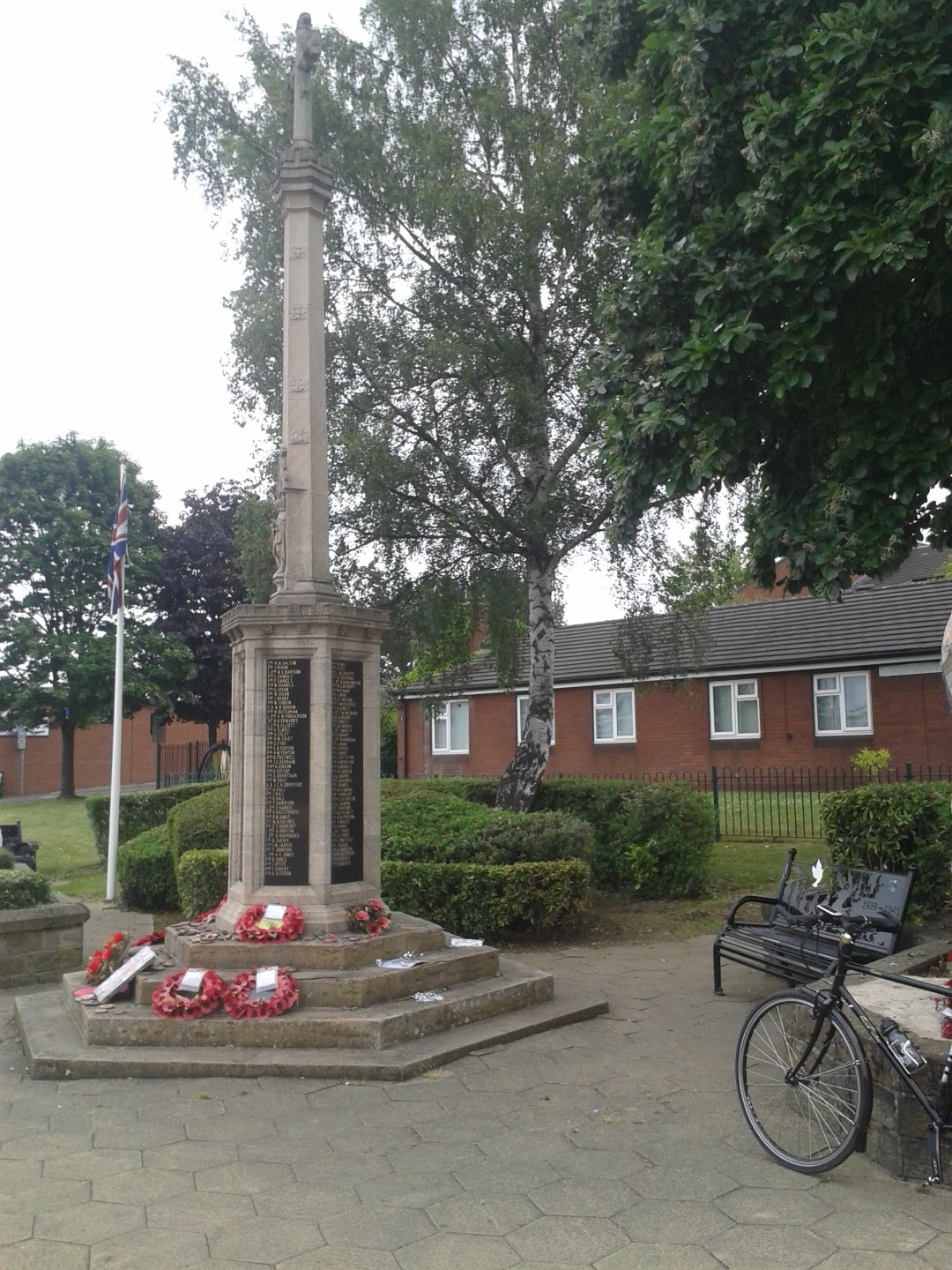
The first couple of miles took me through South Elmsall, a former mining town which served, or was served by Frickley Colliery, just one of several Yorkshire coalfield former mining communities I’d pass through today. In fact just outside town I turned off the road onto Frickley Country Park, one of many recreational areas developed on the colliery sites. The initial section was tarmacked, but I knew I had to leave the park after only a few hundred yards onto a bridleway. This turned out to be in good condition, if not somewhat bumpy, after all the dry weather, but I could see it being less pleasant during rainy periods. Towards the end of the path I hit my only navigational snag of the day. I missed the left turn indicated on the Garmin, but quickly retraced my tracks and took it, even though it looked less promising. It led into a farmyard – not one of those where public access is granted, but a very large, busy dairy cattle concern. I went back to the place I’d made the turn and decided on the straight ahead option … which shortly brought me to a junction where I could see I could make the left turn and rejoin my original planned route. ‘Private road’ it said, with no bridleway signs. I took it anyway, and if someone called me out, I’d ask them where the route indicated on the map actually went. It was fine and eventually popped me back out onto a public road where I headed for Hooton Pagnell.

Behind the above gateway sits Hooton Pagnell Hall, though little of it is visible from the road, a high wall keeping out the plebs and hiding its contents from inquisitive eyes. A short while later I kissed the edge of Hickleton passing the East Lodge and gateway for Hickleton Hall.
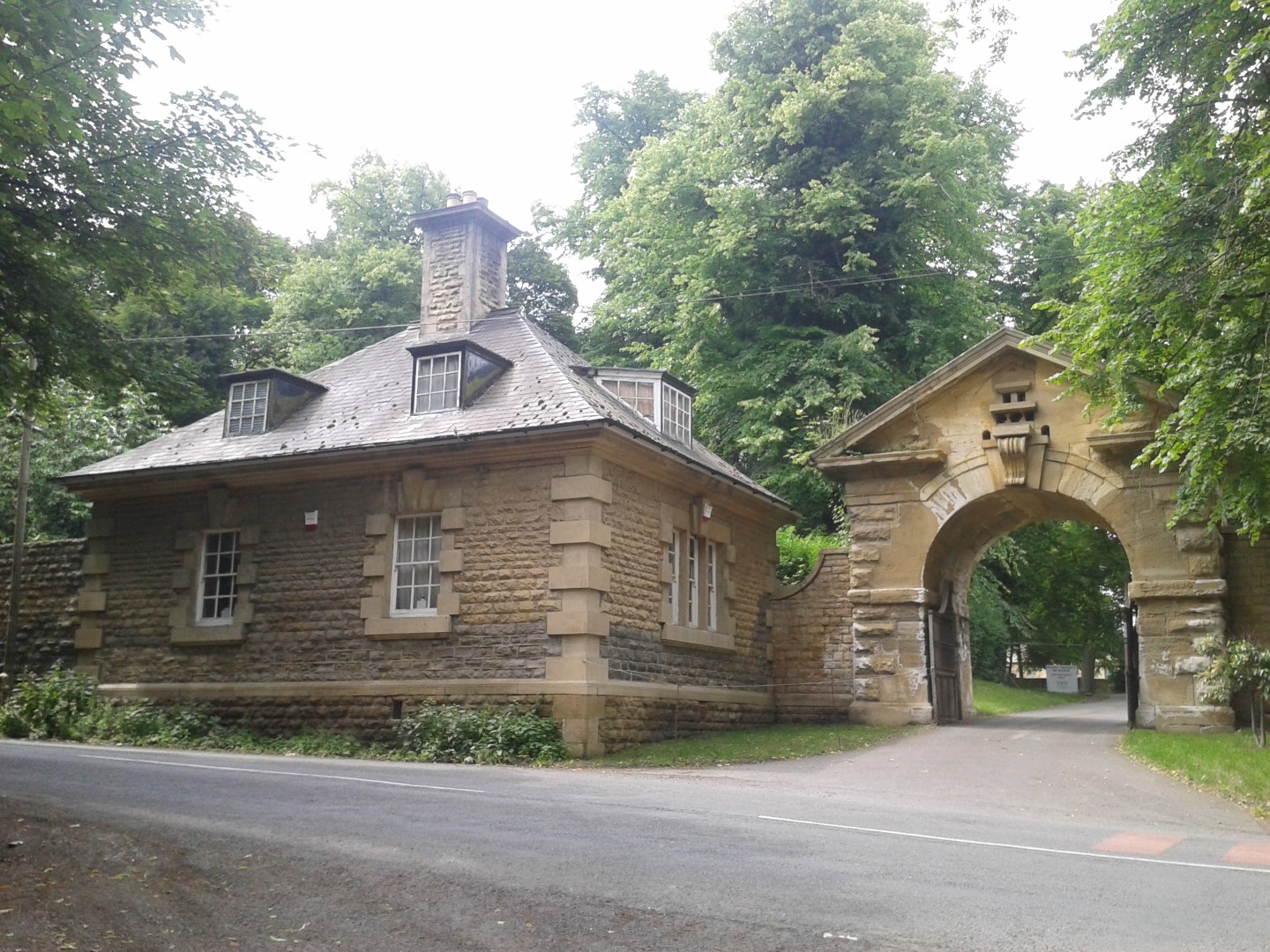

Evidence of the landed gentry is more visible around here than I was aware. Perhaps there’s a connection with the wealth that coal mining generated for the Fitzwilliam family and Wentworth Woodhouse across the valley, and the landed folks across here?
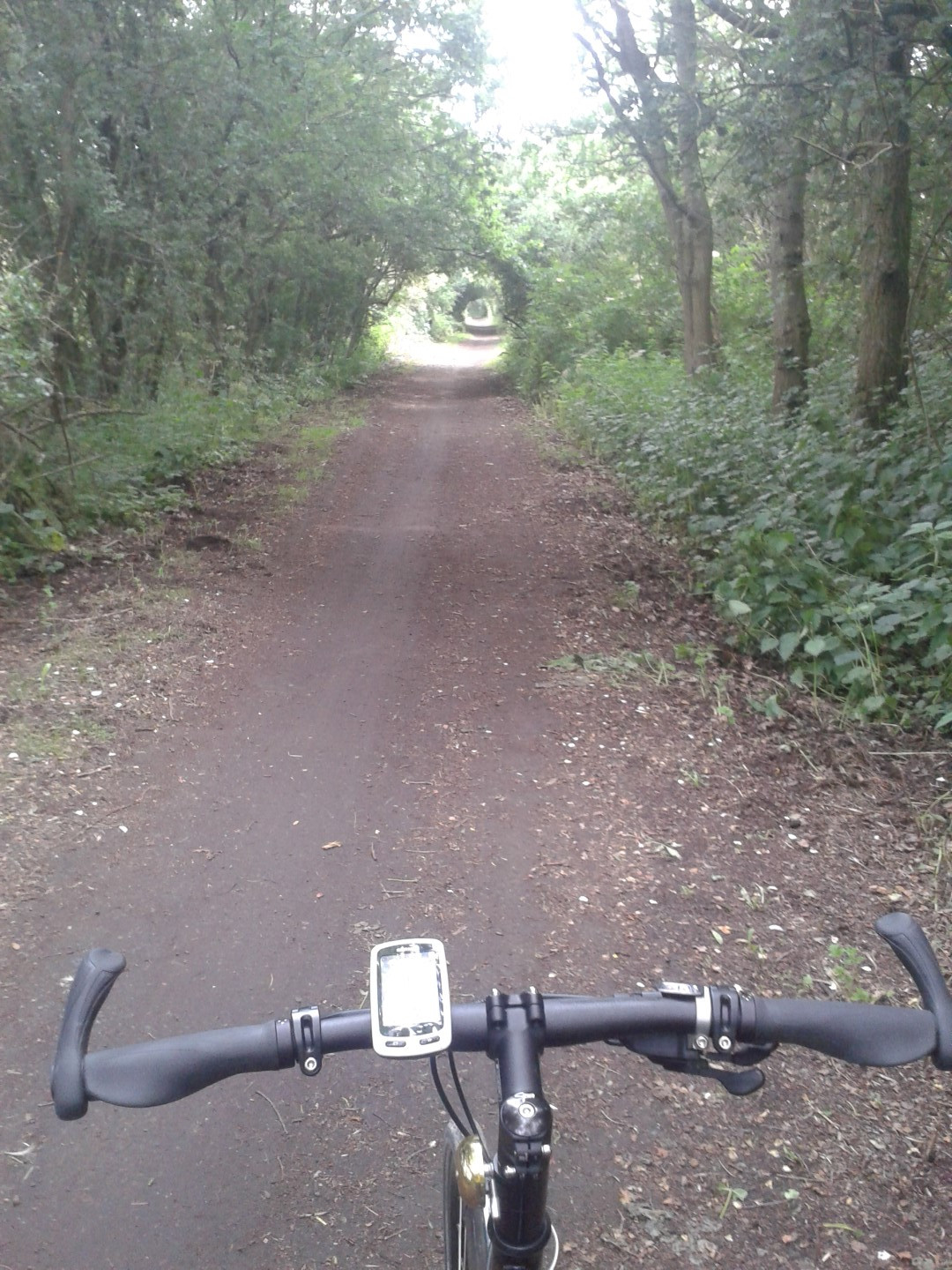
Dropping down through Barnburgh brought me onto the section of the Trans Pennine Trail which runs alongside the Dearne River and through the Dearne Valley. Part of this path runs alongside the river itself, but also follows the track of a former mineral line, now shaded by a tree-lined canopy.
At one point I disturbed and almost ran over a tiny mouse/shrew which quickly scuttled away into the undergrowth before I could apply the brakes, let alone stop to get a photo. Having searched to identify it, based on colour and size – it was only about 4cm long – I think it was more likely to have been a shrew rather than a mouse, but I saw neither its tail nor its nose to help narrow down the options. I often think encounters like this, albeit fleeting ones, are more common on a bike than walking, where wildlife has plenty of advance warning from your footsteps and is likely to be gone before you arrive.


After short stretch of loose, coarse, recently dropped limestone chippings, clearly specified by a non-cyclist, at Denaby Ings, the TPT trail became tarmacked and snaked its way through woods, woods which hide most of the evidence that this area was once the site of Cadeby Colliery. I found this to be a wonderful stretch of trail, with quiet peaceful areas completely hidden from Denaby and Conisbrough just the other side of the River Don and rail line. Just behind a line of bushes I spotted a group of yurts and eco-pods nestled in a large clearing. Since I was pretty sure the Earth Centre was no more, it was only on my return home I found out this was now the site of a children’s residential outdoor eco-centre.

Having seen nothing of the River Don whilst passing through the valley, it perhaps comes as some surprise when you find yourself crossing it at a height of over 100 feet as you traverse the Conisbrough Viaduct. With impressive views up and down the Don Valley, and across to Conisbrough Castle, this was worth the trip alone. The enjoyment of the experience was diminished somewhat as I spotted a few faded bunches of flowers and cards tie-wrapped to the railings marking the sad demise of some young soul.
After climbing out of the valley, the asphalt trail brought me into New Edlington and back onto more familiar terrain, at least until I chose at the last minute to go off route somewhat. I knew as I entered Old Edlington, separated from its younger sibling by a quarter a mile of open land, there was a small lane off to the left down which I’d never cycled. I’d never taken that route because it didn’t go anywhere, nor connect any routes I normally took, but since today wasn’t too demanding, I knew I could add on a handful of miles just … just to find out what was there.

After crossing over the M18 I was stunned to come upon a bridge over two sections of an enormous limestone quarry. There’s an abundance of quarries in the area between here and Maltby, but I wasn’t at all aware of this one at all. After getting home and checking on the satellite maps, it had been there all along, just that when cycling along the road which runs parallel to it, I’d never spotted any evidence. I also note they’ve expanded the workings under the bridge from where the photo’s taken and into the opposite side of the hill. Shows what a little extracurricular exploring can reveal.
The remaining ten miles to home were along very familiar and consequently more mundane roads, but the trip out to Moorthorpe had been so worth it. Not only were the initial miles along roads new to me, the off-road sections along the Dearne and Don valleys were an absolute revelation. I’ve always used roads through here in the past, but now have a quieter alternative route, plus a much more interesting way to get to and from the Edlington-Maltby plateau.
Time to plan further rail-ride adventures methinks.
Pingback: Another Rail-Ride Adventure – Nottingham – VelosaurIan